Introduction
how many weeks in a year Time is one of the most fundamental aspects of human life, yet it often raises surprisingly complex questions. One such question is: How many weeks are in a year? At first glance, the answer seems simple—52 weeks. However, when we dig deeper, we uncover fascinating details about leap years, cultural variations, and practical applications. Understanding weeks in a year is not just about numbers; it’s about how societies organize life, work, and traditions around time. This article explores the concept thoroughly, blending history, mathematics, and everyday relevance how many weeks in a year.
The Standard Calendar Year
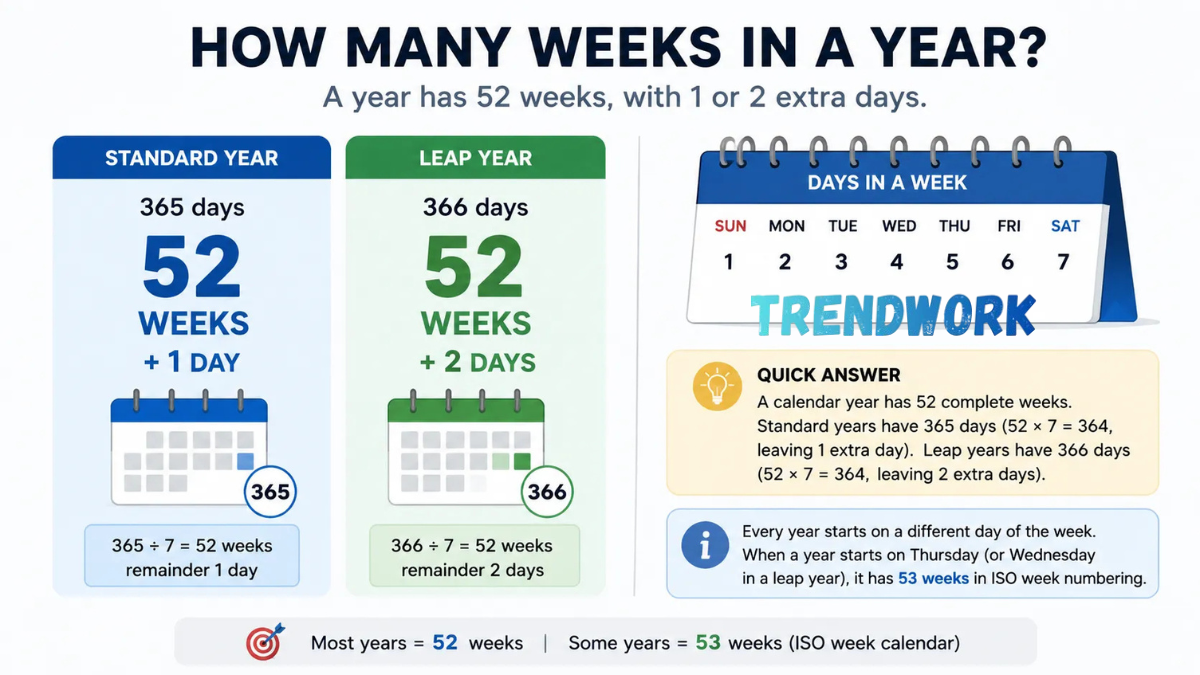
how many weeks in a year A calendar year is defined as 365 days, which is the time it takes Earth to orbit the sun. When we divide 365 days by 7 (the number of days in a week), we get 52 weeks and 1 extra day. This means a standard year has 52 full weeks plus 1 day. That extra day is what makes the calculation slightly more complex than simply saying “52 weeks.”
Leap years add another layer. Every four years, an extra day is added to February, making the year 366 days long. In this case, dividing by 7 gives us 52 weeks and 2 extra days. This explains why some years feel slightly longer in terms of weekly cycles how many weeks in a year.
So while the common answer is “52 weeks,” the precise truth is that a year contains 52 weeks plus 1 or 2 days, depending on whether it’s a leap year. This distinction is important for industries like payroll, accounting, and scheduling, where exact time measurement matters how many weeks in a year.
Historical and Cultural Perspectives on Weeks
how many weeks in a year The seven-day week is so ingrained in modern life that we rarely question its origin. Historically, the concept of a week dates back thousands of years. Ancient Babylonians, influenced by lunar cycles, divided time into seven-day segments. This tradition spread through Jewish and Christian practices, eventually becoming a global standard how many weeks in a year.
However, not all societies used seven-day weeks. The Romans experimented with eight-day cycles, while during the French Revolution, a ten-day week was introduced to break away from religious traditions. Similarly, the Soviet Union briefly tried five-day and six-day weeks in the 20th century, but these systems proved impractical and were abandoned how many weeks in a year.
The persistence of the seven-day week highlights its cultural and religious significance. It is tied to creation myths, celestial observations, and societal rhythms. Today, despite globalization and technological advances, the seven-day week remains universal, shaping calendars, work schedules, and cultural traditions worldwide.
Practical Applications of Weeks in a Year
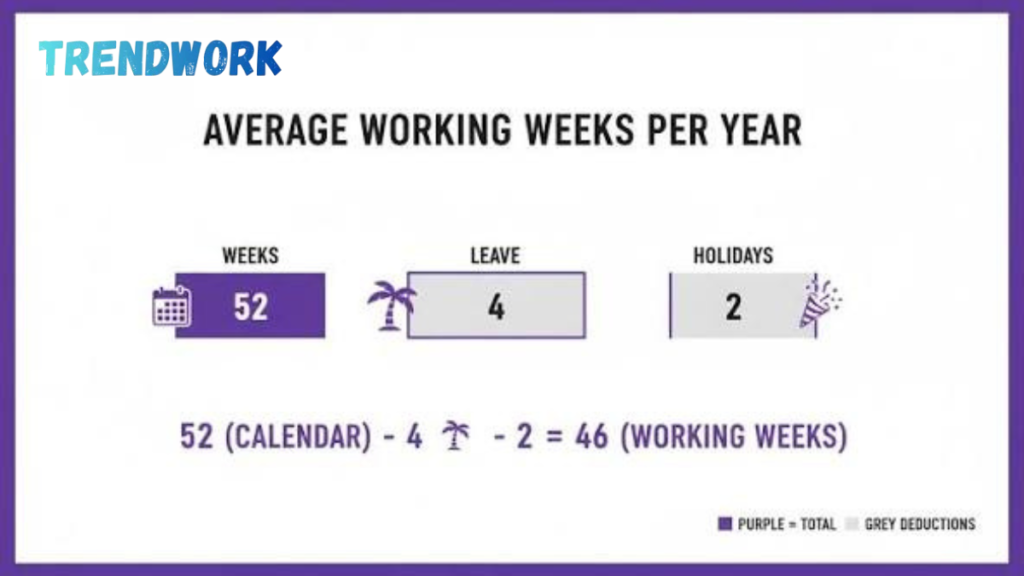
how many weeks in a year Weeks are more than just a way to measure time—they structure our lives. Academic calendars are built around weeks, with semesters and school terms often lasting a set number of weeks. Businesses rely on weekly cycles for payroll, meetings, and reporting. Financial quarters, though measured in months, are often broken down into weekly segments for planning how many weeks in a year.
In personal life, weeks play a role in fitness programs, pregnancy tracking, and project management. For example, pregnancy is commonly measured in weeks, making the concept vital for healthcare. Sports seasons, too, are scheduled weekly, with matches and training sessions organized around this rhythm how many weeks in a year.
Even global events like the Olympics or World Cup are planned with weekly cycles in mind. Weeks provide a manageable unit of time that balances precision with practicality, making them indispensable in both professional and personal contexts.
Variations and Special Cases
While the general rule is 52 weeks per year, variations exist. The ISO week date system, used in business and international standards, defines weeks differently. In this system, a year can have 53 weeks if January 1st falls on a Thursday or if December 31st does. This explains why some calendars list “Week 53.”
Fiscal years also complicate matters. Unlike calendar years, fiscal years may start in April or October, depending on the country or organization. This affects how weeks are counted for budgeting and reporting.
Industries like construction, healthcare, and retail often use specialized week counts to align with operational needs. For example, retail businesses may adopt a “4-4-5 calendar,” dividing the year into quarters of 13 weeks each, ensuring consistency in reporting.
These variations show that while the concept of weeks in a year seems straightforward, its application can differ significantly depending on context.
Common Misconceptions
One common misconception is that a year always has exactly 52 weeks. In reality, it has 52 weeks plus 1 or 2 days, and sometimes 53 weeks depending on calendar alignment. Another misconception is confusing weeks with months or quarters. While months vary between 28 and 31 days, weeks are fixed at 7 days, making them more consistent.
Astrological and cultural calendars also contribute to confusion. Some traditions measure time differently, leading people to believe that weeks vary across cultures. While historical variations existed, the modern seven-day week is now globally standardized.
By clarifying these misconceptions, we gain a more accurate understanding of how weeks function in both everyday life and specialized contexts.
Conclusion
To summarize, a year contains 52 full weeks plus 1 day, or 52 weeks plus 2 days in leap years. In certain systems, a year may even be considered to have 53 weeks. Beyond the numbers, weeks are a cultural, historical, and practical framework that shapes how we live and organize time. Understanding this concept helps in planning, scheduling, and appreciating the fascinating history of time measurement.
FAQs
How many weeks are in a leap year?
A leap year has 52 weeks and 2 extra days.
Can a year have 53 weeks?
Yes, depending on how the calendar days align, some years are considered to have 53 calendar weeks.
Why is a week 7 days long?
The seven-day week originated from ancient civilizations and religious traditions, later adopted globally.
How many working weeks are in a year?
Typically 48–50, depending on holidays and vacation time.
Is the number of weeks the same worldwide?
Yes, but some cultures historically used different week lengths before the modern calendar system.